
Understanding JWT: Basics and Security Risks
JSON Web Tokens are compact and convenient, but easy to get wrong. How JWTs actually work, and where their security risks hide.
Read articleServices
Our commitment to delivering robust and secure software solutions drives a comprehensive code analysis methodology that blends automated code scanning with manual code reviews by seasoned security experts.
Why choose Laburity
We adopt an impact-driven security assessment methodology, concentrating on crucial issues for your online security. By minimizing noise and maximizing value, our focus is on identifying and reporting vulnerabilities that matter most.
Top-quality security services at budget-friendly rates, ensuring exceptional value for your investment alongside robust security measures tailored to your needs.
We go beyond identifying vulnerabilities; we provide hands-on support to help mitigate them effectively, with complimentary consultations designed to enhance your security posture.
In-depth static and dynamic code analysis of your codebase beyond the traditional vulnerabilities, focused on the open source attack surface as well.
Types
Advanced tools scan and analyze code for vulnerabilities, ensuring rapid detection of potential issues. This process runs checks for known security flaws and coding misconfigurations to give your development team clear guidance on immediate fixes. It covers everything from dependency vulnerabilities to configuration weaknesses, providing a thorough assessment with minimal manual intervention. Automated audits help identify vulnerabilities early, reducing the risk of costly fixes later.
Hands-on inspection by seasoned security experts who analyze code in-depth for complex vulnerabilities and logic flaws that automated tools may miss. This audit covers architectural, business logic, and contextual issues, focusing on specific risks to your application's unique setup. With a keen eye for subtle security risks, our experts validate security controls and provide detailed insights on hard-to-detect flaws, going beyond automated scans.
Methodology
We define the scope of the assessment, identifying the code repositories, modules, and associated libraries to be reviewed. We create a code inventory including dependencies and third-party libraries, then proceed with threat modeling to pinpoint threats and vulnerabilities unique to your code landscape.
We select trusted scanning tools such as SonarQube, Checkmarx, and our in-house automation platforms, then conduct static analysis for common vulnerabilities like SQL injection and XSS, dynamic analysis for runtime vulnerabilities, and dependency scanning of third-party libraries.
Thorough manual code inspection uncovers complex vulnerabilities automated tools might miss. We conduct a security architecture review of the codebase's design and structure, and a code flow analysis tracing critical data through the code to identify points of exposure.
We collate findings from automated scans and manual reviews into a comprehensive picture of the codebase's security status, prioritize risks by severity and potential impact, and deliver detailed risk mitigation strategies for each identified vulnerability.
We evaluate the security of third-party libraries and frameworks, conduct a dependency analysis of everything integrated within the code, and review library versions with patch management practices to mitigate vulnerabilities associated with outdated dependencies.
We assess API integration security to ensure data integrity and confidentiality, confirm integrations align with security standards, evaluate encryption implementations, and assess input validation processes to prevent data manipulation and injection attacks.
We evaluate authentication mechanisms, including token management and credential encryption, then assess the authorization logic and access control structure. Role-Based Access Control (RBAC) is verified to confirm each role resolves to the permissions it should actually hold.
We test performance under varying loads to surface bottlenecks that degrade into availability risks, and assess how the codebase scales as user load grows, so that resilience holds under real traffic rather than only in ideal conditions.
We verify code signing to confirm the authenticity and provenance of the shipped artefacts, and review runtime integrity checks that detect unauthorized modification of code after deployment.
We test the effectiveness of your CSRF defences, confirming an attacker cannot impersonate a legitimate user to perform state-changing actions without their intent.
We verify HTTP security headers, including HSTS, Content-Security-Policy, and X-Content-Type-Options, and review secure cookie configuration such as the HttpOnly and Secure flags.
We scan container images for vulnerable packages and misconfiguration, and assess orchestration security across platforms such as Docker and Kubernetes, where a permissive default can undo hardening done at the code level.
We identify and help mitigate SSRF vulnerabilities, where an application can be coerced into making unauthorized requests to internal systems that were never meant to be reachable.
We review cryptographic algorithms and key management for weak or misapplied primitives, and analyse SSL/TLS configuration against known vulnerabilities such as POODLE, BEAST, and Heartbleed.
You receive an executive summary of key findings, a detailed technical report with exploitation scenarios, a remediation roadmap with timelines, and a retesting plan to verify each fix actually closed the gap.
Credentials
Our cyber security team is certified and affiliated with well-known and industry-recognized certifications and organizations.







Testimonials
Our clientele
Our team members have helped hundreds of companies reporting vulnerabilities under responsible disclosure and got recognized by them.
 Microsoft
 Apple
Apple Google
 United Nations
 PayPal
 eBay
eBay BlackBerry
 Western Union
 Magento
 Wise
Wise Bugcrowd
 Seek
SeekResearch & insights

JSON Web Tokens are compact and convenient, but easy to get wrong. How JWTs actually work, and where their security risks hide.
Read article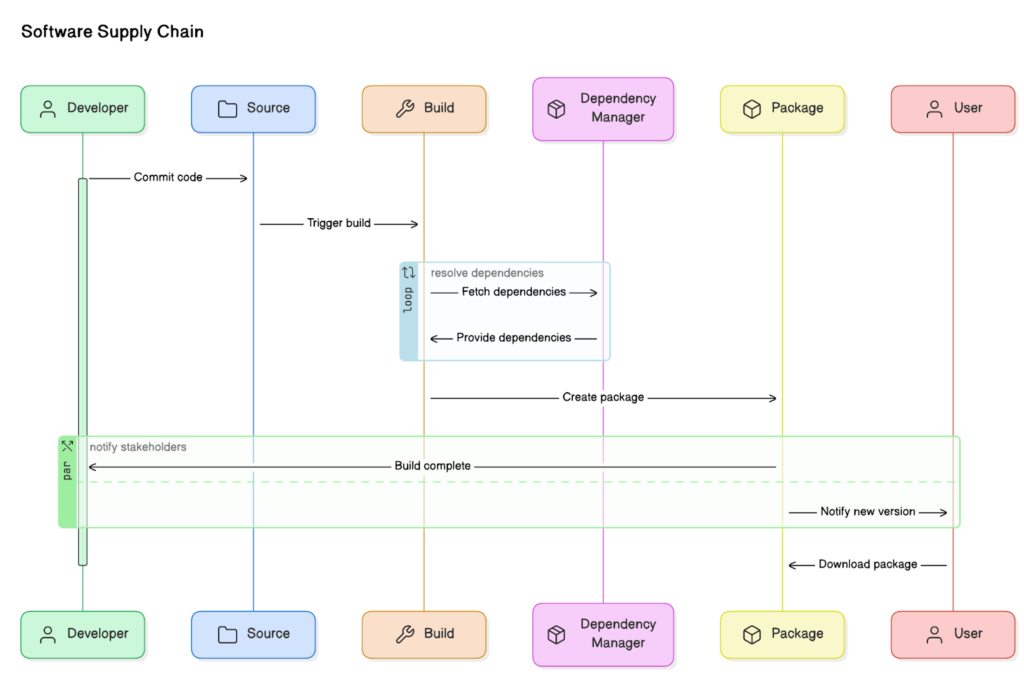
Software supply chains are complex ecosystems where even a single vulnerability can lead to widespread compromise.
Read article

Hassan Khan Yusufzai, Director at Laburity, was recently featured in an interview with SafetyDetectives.
Read articleDon't wait for a breach, secure your cyber space now. You would be talking to an actual cyber security expert.